
Book Review: The Adventures of Tom Sawyer
- Jillian
- Jan 13
- 4 min read


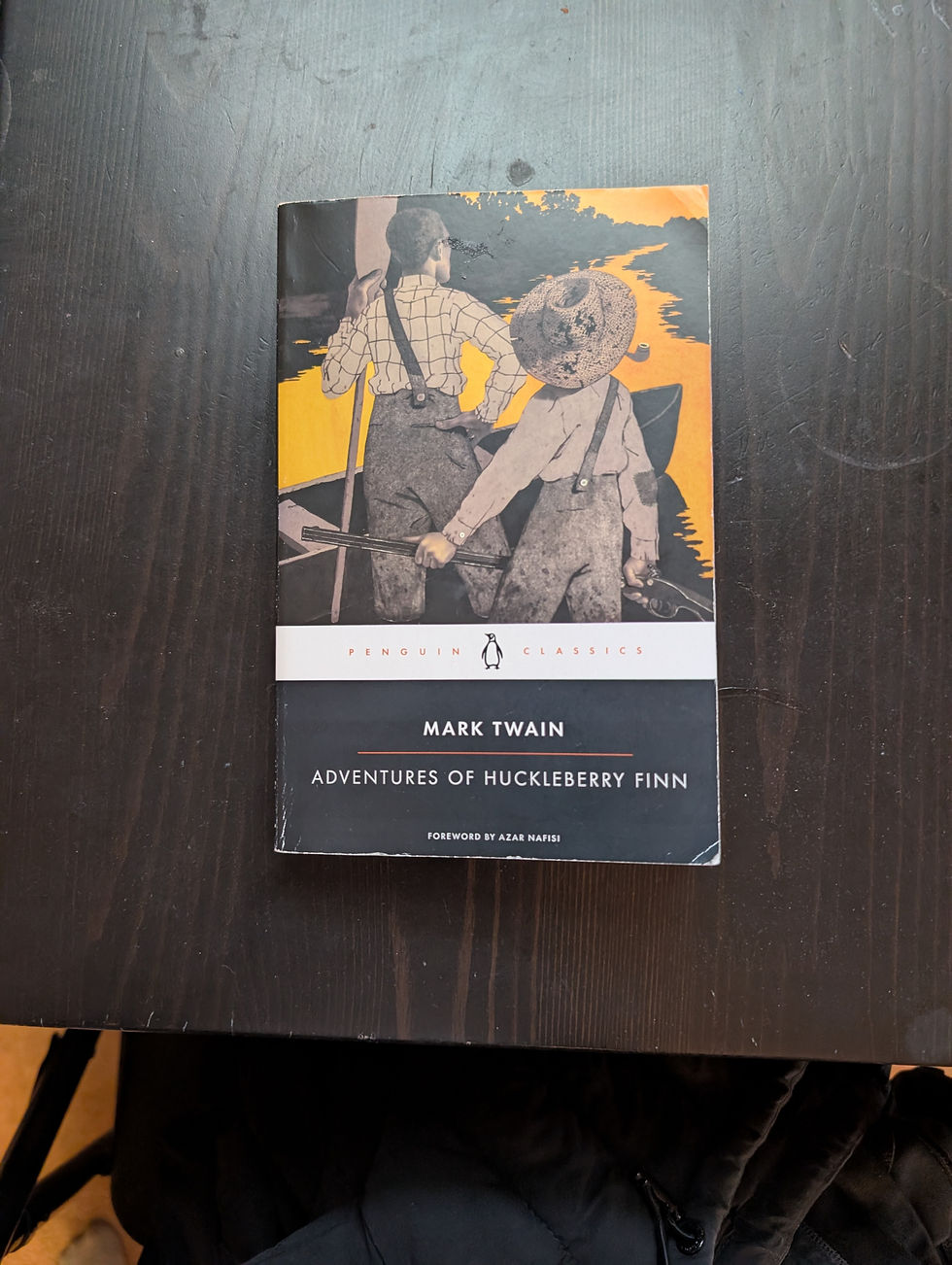
Today I’m going to be discussing the book, The Adventures of Tom Sawyer by Mark Twain. Mark Twain is considered an author of the American Realism time period in American Literature. Realist literature focuses on everyday people with themes of social issues and the realities of society. Mark Twain went to Yale for a part of his undergraduate degree. Mark Twain also wrote The Adventures of Huckleberry Finn (which is a book I’ll probably end up reading for the next blog post.) While Huckleberry Finn has themes of social injustice and moral dilemmas with the main character, Huck, The Adventures of Tom Sawyer has themes of adventure, young adolescence, and making decisions. The main character is Tom Sawyer.
In the book, The Adventures of Tom Sawyer the minor characters are Becky Thatcher, Huckleberry Finn, Sid Sawyer, Aunt Polly, and Joe Harper. The book takes place in Saint Petersburg Mississippi during the 1840’s. The plot in this book is detailed and descriptive. At the beginning, Tom proposes to his high school crush, Becky, and the book seems to be focused around school. Following the school scenes, Tom and Huck witness a murdeer at a graveyard. Tom, Huck, and Joe run away to become river pirates. At first they were going to be grave robbers for additional cash from growing up poor, but it didn’t work out when they saw Injun Joe murdering the doctor in the graveyard. Back in Saint Petersburg, the boys’ families know that the boys are missing, and they begin grieving and believe that they have been killed. The boys show up at their funerals, surprising their families. There is a court case in which Tom testifies against Injun Joe, and then Injun Joe flees the town.
The seasons turn to summer, and Tom and Huck go on an adventure for treasure in an abandoned house. The boys realize that they aren’t alone, and they also realize that is where Injun Joe is hiding treasure. Injun Joe found additional treasure when he was hiding his own in the abandoned house.
Tom and Huck end up finding a cave that is close to the abandoned house. Both boys realize that is where Injun Joe moved all the treasure, but the cave has many turns and stretches for many miles. Tom and Becky go on a date, and they are stuck in the cave for almost a week because they got lost. They eventually find their way out, but they saw Injun Joe in the cave when they were lost. Becky’s dad is the town judge, and he orders a lock to be on the cave. Injun Joe ends up dying from starvation. The boys end up picking the lock, and find the treasure. For a long time they thought that the treasure might have been at the town’s abstinence tavern. At the end of the story, Huck runs away.
Mark Twain’s writing style is complex because he uses educated formal writing for his book, threaded with deep southern dialogue, and descriptive action scenes with less formal educated writing. Because of the different threads of writing, I had to reread sections at times, and google search word meanings. Throughout the book, the reader sees the differences in culture and lifestyle from the present day compared to the South in 1840’s. There are certain events that don’t make such sense compared to modern day, such as the river pirates and the grave robbers, and Huck’s poor and vagrant lifestyle because of his alcoholic father. The character Huck is an orphan and has a complicated relationship with his dad. He doesn’t have a house to live in, steals most of his meals, and is dressed in other people’s old clothes.
This book is very heavy action centered without any allusions, symbolism, or deeper meanings behind the words. The themes are straightforward, and a reader does not have to guess what the author meant or the author’s tone in the book. Although the book is considered to be a children’s book, the plot is complex, and there are educated college words used within the book. The book is easier to understand once it’s finished, and a person watches a video summary online.
I think this book would be a good fit for 8th and 9th graders- there is enough action to keep the classroom entertained and enough new vocabulary for students to learn to use new words. The themes are seen throughout the book, and there are conversations that a teacher could have with the class about Mark Twain’s commentary about the importance of family, a young adolescent and decision making, and the importance of friendship. There could also be a conversation on the differences of life in the South during the 1840’s compared to now.
Happy 2026!! I hope to continue to keep writing into the New Year!
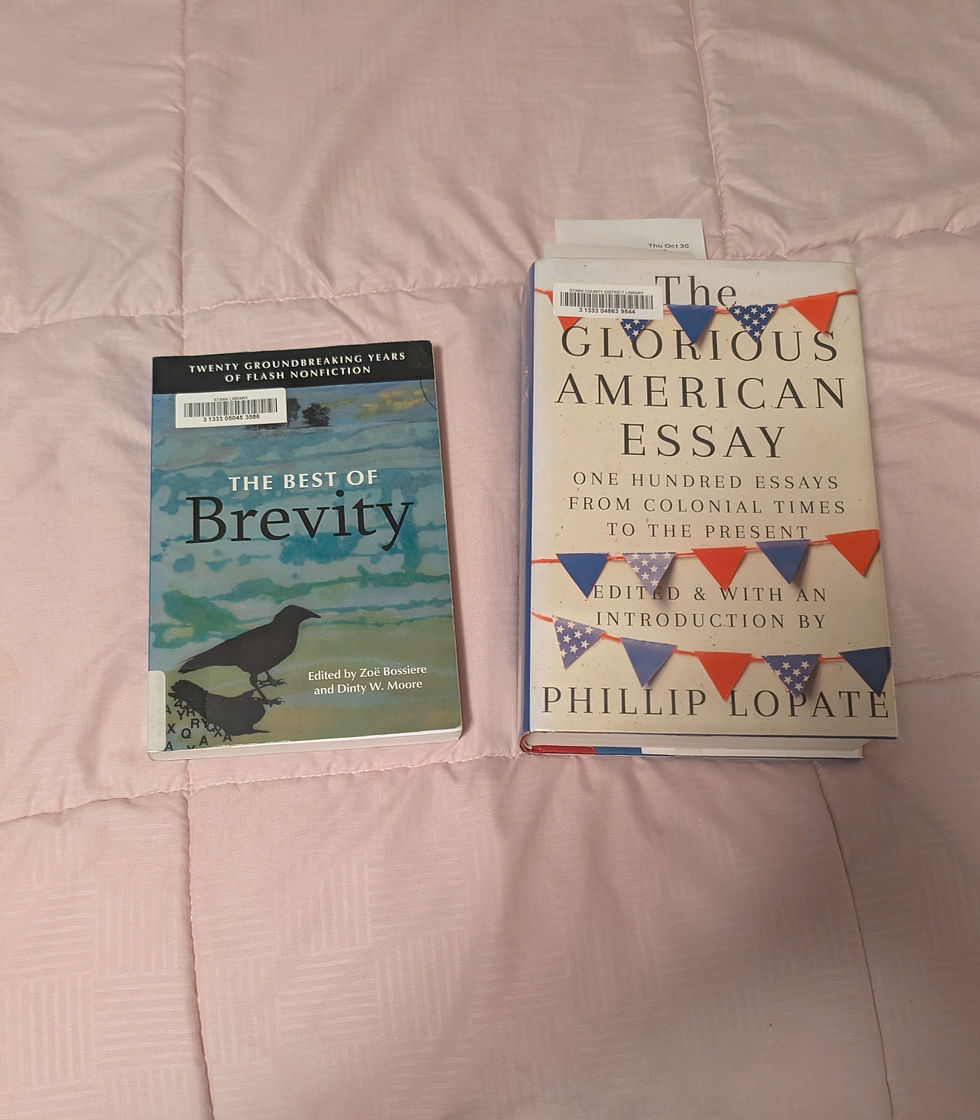
Side note: I skimmed through Phillip Lopate’s anthology, The Glorious American Essay during the first week back from winter break. I don’t have enough of a background with different American authors to fully understand each essay with its cultural influences and how it influenced American Literature (there are over 100 essays in the book), but it was fun to read through some of them.
My favorites include:
James Baldwin, Equal in Paris
Cynthia Ozick, A Drugstore in Winter
Guy Davenport, On Reading
I didn’t have as much time as I would have liked with this collection- I might be adding more commentary about it in the future.
I also did some research on Phillip Lopate, and he is a retired professor who used to teach CNF at Columbia. He has written books on the craftsmanship of essays, and also has his own personal essays published about New York City and teaching. I’m hoping to buy his other anthology called, The Contemporary American Essay in addition to getting my own copy of The Glorious American Essay. The Contemporary American Essay isn’t at the library to borrow, and the Ohio Library Consort program isn’t fully running at the moment.
I also borrowed a copy of the anthology, The Best Of Brevity from the library. It’s a collection of essays from the literary magazine Brevity- specifically known for Creative Nonfiction Essays. If I end up going to graduate school for English and take some CNF writing classes, this is probably a book I need to have. I will probably also end up reviewing this anthology more, once I get my own copy (along with the other ones).
Thank you for reading, have a Great Day!



Comments