
Book Reviews of 2024: part two
- Jillian
- Feb 23, 2025
- 4 min read

Updated: Jan 18
The next book book reviews are going to be longer in length because they have psychology based information, and they are a bit more interesting than the others.
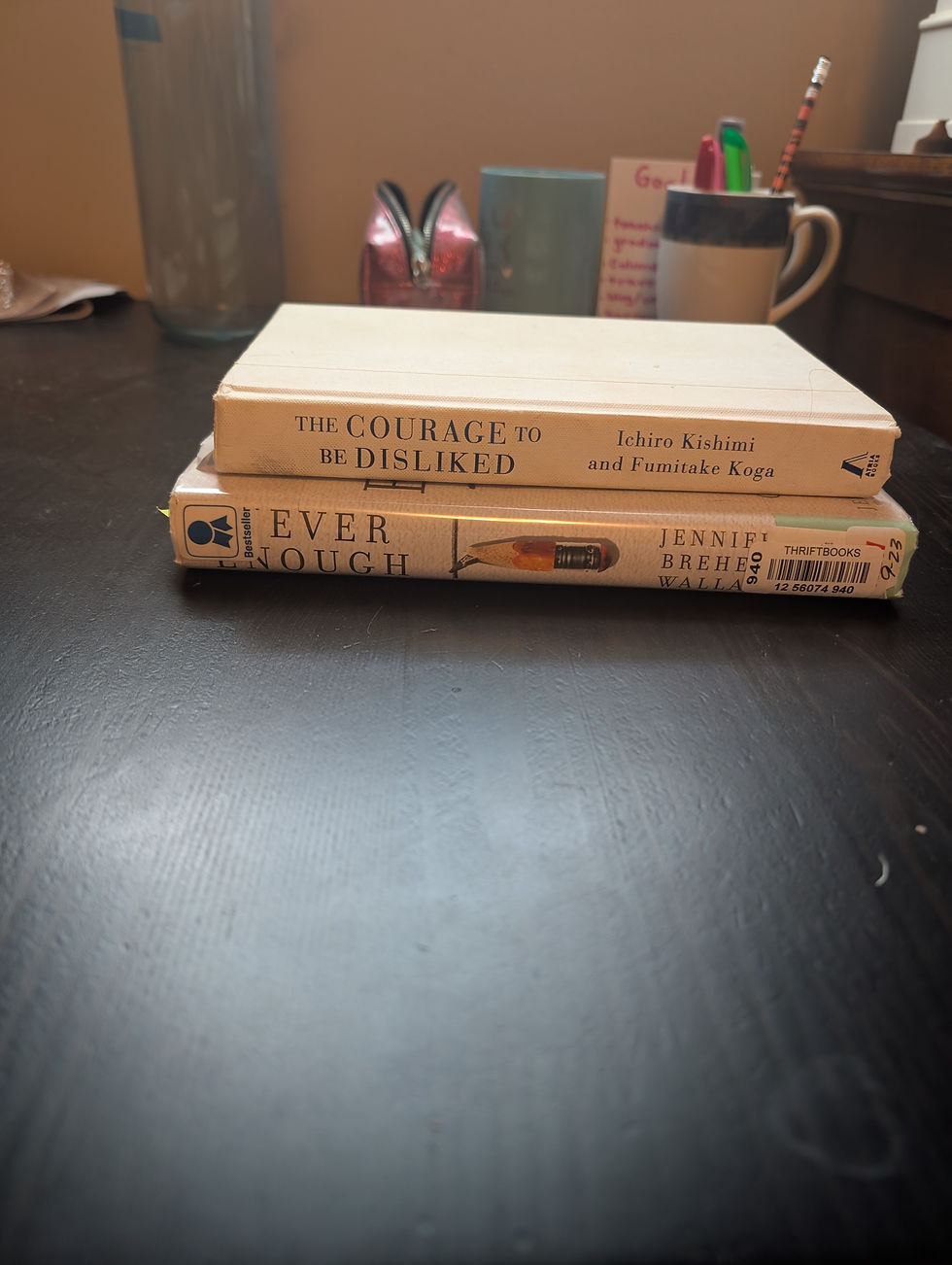
The book “Never Enough” by Jennifer Breheny Wallace is an informative educational psychology book on Wallace’s findings as a journalist. She details the concerns about the achievement culture in the United States, specifically that of affluent neighborhoods with both parents that are college educated in high paying, high demanding jobs. She also describes how the achievement culture is bad for both children and their parents, and the consequences of high stress in young adolescents and the stakes that parents go to to ensure that their child is reaching their full potential. Wallace also explains how these parents worry and compete for their children to receive the best resources (tutors, classes, etc.) to help them reach the top of the success ladder.
The points that are brought up in the book are valid and show concern for upper class children and privileged students, documenting that there are more mental health issues for these children and adolescents in affluent communities than in urban, poorer communities. There is a conversation about the social hierarchy, and why there is social pressure for these children to keep up with their classmates, and to stay in good social graces with their neighbors. The lengths that parents go to in these affluent cultures is in fact extreme and at times parents make bad decisions for their children’s mental health in order for them to succeed.
This book is one of my favorites that I read from the list. I like the topic of the book, along with its use of data and statistical comparisons between mental health, adolescent work ethic, parent work ethic, and the different social classes. I think it’s important to note that the achievement gap is discussed in this book but the book focuses primarily on the upper class and the lengths that parents go to in order to ensure that their child will be successful. It notes that many of these parents, Jennifer Breheny Wallace included, are concerned that they are pushing their child too soon to follow their dreams of becoming an archeologist or an astronaut.
There is some practical advice the book gives to address the toxic achievement culture in these communities. This advice can also be used for upper middle class communities too which is helpful. The book has positive and useful information on how to build a close knit family, how to keep thoughts positive and not negative, and to be more objective than subjective with certain situations. She mentions Gordan Flett's psychology work when explaining better parenting advice. The book does a good job on having tips ready for parents to battle the achievement culture and how to protect their children from seeing the world as a materialistic, grade obsessed place.
The book “The Courage to be Disliked” by Fumitake Koga and Ichiro Kishimi is a five section book that tells the story of a young man and a philosopher. They have an ongoing conversation about many different topics and themes- the major ones including identity, specifically, perception of oneself, a person’s thoughts and feelings and how those are formed, a person’s access to knowledge, and lastly the search for meaning in a person’s life. Adlerian psychology is mentioned by the philosopher and is the main topic for most of the philosopher’s arguments and comments in the book. The book is an easy read, but it’s one of the self-help books that I have annotated a lot of the information to understand the main topic and the character’s thoughts and feelings during their conversation. The book is extremely informative with psychology based information that anyone could use to change their mindset on their present life including their career, mindset towards work ethic and interpersonal relationships. The book also touches on intrapersonal relationships and how to live by a code of conduct with intrinsic values as the measure of success.
I first read this book when I lived in Delaware in a duplex with a roommate from a restaurant that I worked at back after college. I annotated a lot of the interesting concepts and ideas that the philosopher and the young man spoke about. I began rereading the book because there seemed to be a lot of information in the book, and I had a feeling that I was forgetting or overglancing something with the book. I also think it’s important that I reread the book because I never made a blog post the first time.
Some key take-aways:
Adlerian psychology sees emotion as a tool to help a person achieve a goal (ex. Anger is used as a tool to help someone get what they want pg. 16.)
“You hold the cards to your interpersonal relationships.” pg. 147. There is a long conversation about interpersonal relationships and the importance of them. It also explains how one views oneself depending on the quality of the relationship. A large section of the book discusses interpersonal relationships.
Do not take the responsibility of doing others work or tasks for them- in this section the author has the philosopher warning the youth about taking on the emotional burden of others work and interpersonal relationship expectations. He warns that the other person will never become fully responsible if the other person keeps doing his/her work.
Holism, Community, and Individuality- Personal relationships within a community is a theme the author discusses. The youth and the philosopher spoke about the importance of being true and earnest to yourself while being a part of a greater community.

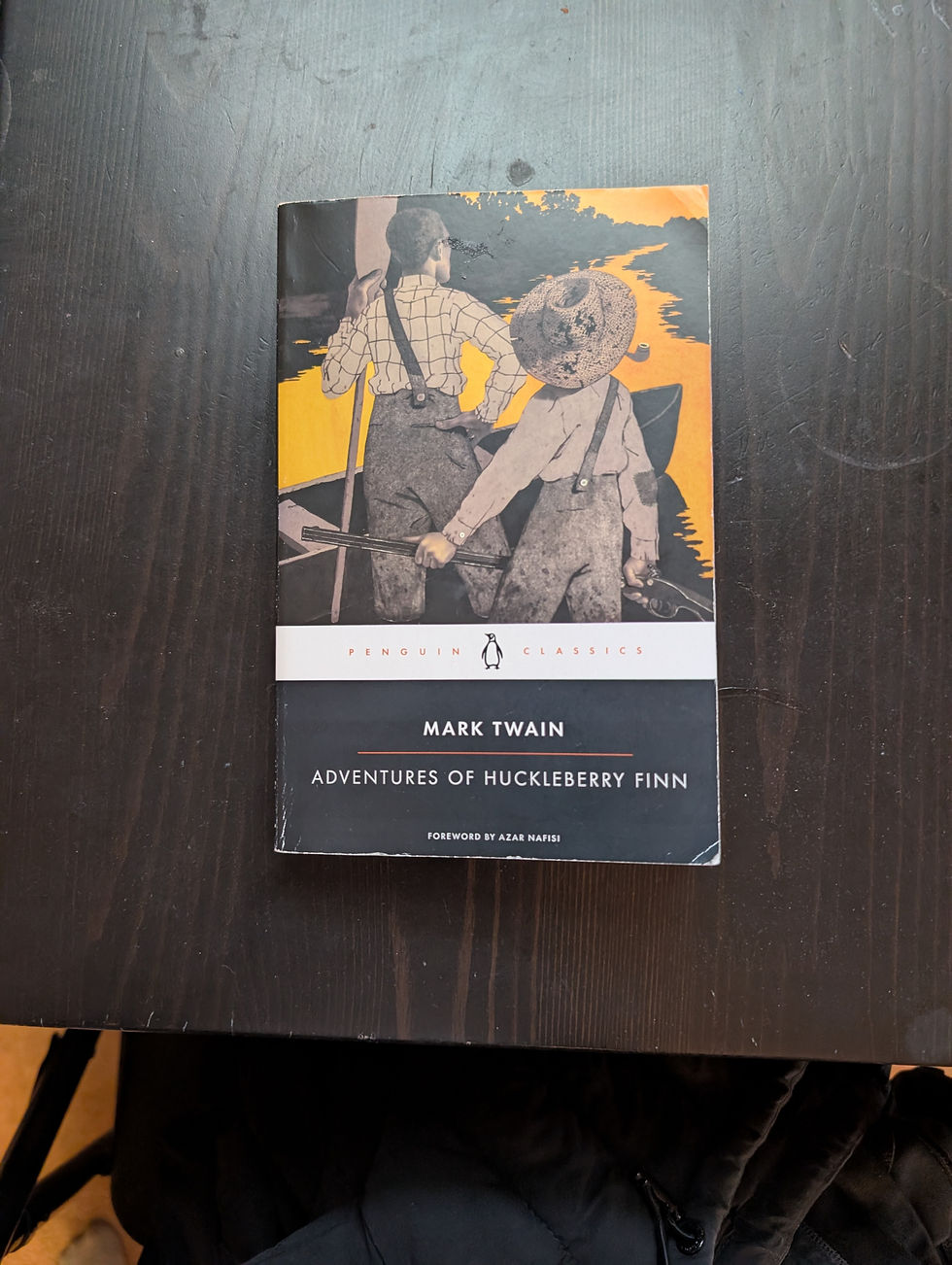
Overall from the books I read "Never Enough" and "The Courage to be Disliked" were my two favorite. I might continue to add other self-help books I've already read to the book reviews if I reread them. My plans for book reviews moving forward are YA books that I might be able to use in my future classroom, personal fiction books, and any other self-help discovery book I find that seems interesting. Also there are a few classics that I've never read in high school or college that I would like to read eventually.
Thank you for reading! Stay tuned for next time!


Comments